El Paso Cross-Border Freight for Manufacturers Shipping Between Texas and Mexico
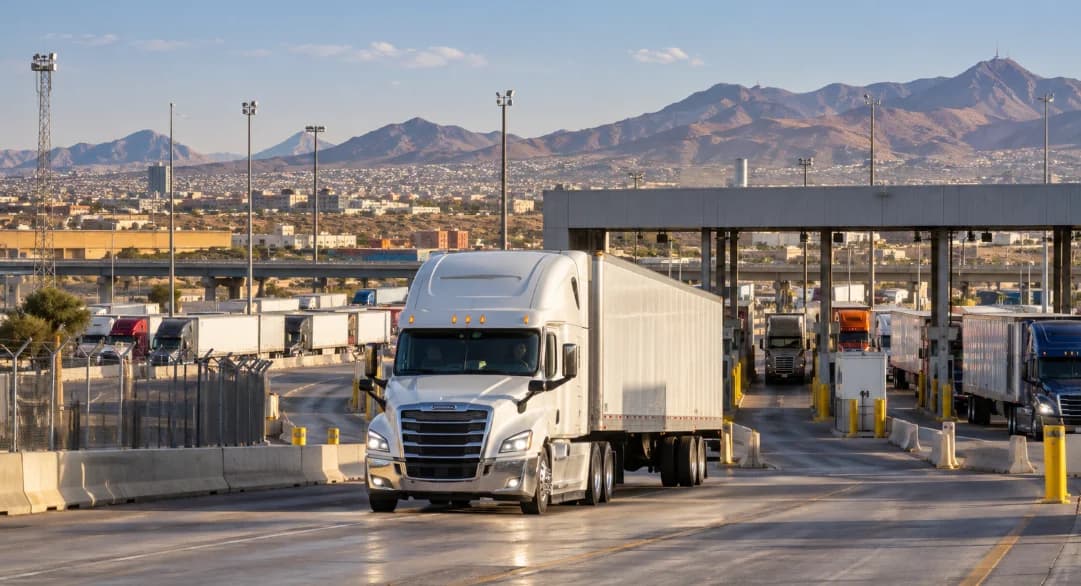
El Paso cross-border freight works best when manufacturers plan the U.S. transportation leg, border handoff, customs responsibilities, equipment, and receiving schedule as one connected move. A truck can reach El Paso on time and still lose hours if the next provider isn’t ready, documents don’t match the freight, or the receiving facility expects a different arrival window.
At Freight Squad, we support El Paso freight shipping tied to Mexico trade lanes, manufacturing, truckload, and LTL capacity. For manufacturers moving components, finished products, equipment, or materials between Texas and Mexico, the transportation plan needs to account for what happens before and after the border rather than treating El Paso as an ordinary delivery point.
How El Paso Cross-Border Freight Differs From a Domestic Texas Load
A domestic load from El Paso to Dallas can usually move under one transportation plan from pickup through delivery. Cross-border manufacturing freight introduces another operational point into the route.
The shipment may need to coordinate a U.S. transportation provider, customs process, broker, border crossing, Mexican transportation provider, transfer facility, or some combination of those pieces. The exact setup varies by shipment.
Manufacturers should know where responsibility changes hands. Does the original trailer continue across the border? Will another provider take over? Does the freight move through a transfer facility? Who schedules the next pickup? Who gets notified if customs clearance takes longer than planned?
Those answers affect the pickup schedule before the first truck leaves the dock.
Start With the Border Handoff
A good cross-border plan identifies the handoff point early.
If freight will transfer between transportation providers in the El Paso area, both sides need the same shipment information. Pallet count, piece count, dimensions, weight, commodity, seal information, delivery requirements, and equipment type should match across the transportation plan.
Manufacturing freight often runs on tighter schedules than general merchandise. Components may support a production line. Raw materials may need to reach a plant before a scheduled run. Finished products may already have a distribution appointment waiting on the other side.
Build enough time around the handoff to account for normal border processing without creating an unrealistic delivery commitment.
Keep Customs Responsibilities Separate From Transportation
Transportation and customs clearance are connected, but they aren’t the same service.
Before booking the load, determine who will handle the customs side and who holds responsibility for the required import or export information. U.S. Customs and Border Protection explains that importers may handle their own entries or work with a licensed customs broker. Even when an importer uses a broker, the importer remains responsible for the accuracy of the entry information.
Your customs broker may need commercial documents, commodity descriptions, values, country-of-origin information, classifications, or other shipment-specific records. Requirements vary according to the goods and direction of trade.
Resolve those questions before the truck reaches El Paso. A driver waiting near the border is a poor place to discover that someone still needs a document, confirmation, or corrected product description.
Freight Squad coordinates transportation rather than presenting itself as a customs broker. When you request a freight quote for a Mexico-connected lane, tell us how the customs and border portion of the move will work so we can plan the transportation around it.
Choose Equipment Around the Freight and the Handoff
The Mexico connection doesn’t change the basic rule for equipment selection: start with the freight.
Standard palletized manufacturing goods may fit a dry van. Machinery or fabricated components may require flatbed equipment. Oversized industrial equipment could require specialized heavy-haul planning.
For larger shipments, full truckload freight shipping gives one shipper dedicated trailer space and reduces terminal handling on the U.S. leg. That can make sense for recurring plant-to-plant freight, higher-volume component shipments, or loads with firm schedules.
Smaller U.S. shipments may fit LTL freight shipping. LTL works well for freight that doesn’t require an entire trailer, but manufacturers should account for terminal transfers and additional handling when packaging the load.
If the freight will transfer again near the border, packaging matters even more. Build pallets, crates, and skids for the total handling environment rather than preparing them only for the first truck.
Match the Schedule to the Entire Move
Driving time from a Texas plant to El Paso tells only part of the story.
The schedule may also include loading time, appointment windows, border processing, transfer time, customs release, equipment availability on the next leg, and the final receiving appointment.
A manufacturer shipping from Dallas toward a Mexico plant shouldn’t schedule the first pickup around road miles alone. Start with the actual deadline and work backward.
Ask:
- When does the destination need the freight?
- Does the destination require an appointment?
- What border crossing or handoff will the shipment use?
- When will the customs documentation be ready?
- Is another transportation provider taking over?
- How much time does the transfer process require?
- Can the receiving facility accept a late arrival if the border takes longer than expected?
- Who needs an update if the schedule changes?
For recurring manufacturing lanes, document those answers instead of rebuilding the process for every shipment.
Give Every Party the Same Freight Information
Small data differences cause larger problems on cross-border moves.
One provider may receive a weight from the purchase order while another gets the final shipping weight. A broker may have one commodity description while the bill of lading uses another. Packaging may add several inches after the original dimensions were submitted.
Confirm the final shipment after packing.
For a typical manufacturing load, the transportation information should include the origin and destination, commodity, pallet or piece count, final dimensions, total weight, loading method, required equipment, pickup window, delivery requirements, border plan, and any transfer instructions.
Machinery and unusual freight should include current photographs. If a component has lifting points, fragile surfaces, protruding controls, an uneven base, or a concentrated weight area, share that information before equipment gets dispatched.
Recurring Texas-Mexico Manufacturing Lanes Need Consistency
Manufacturers that move the same lane every week have an advantage: they can standardize much of the transportation process.
Share expected volume before every load becomes urgent. If production normally generates three truckloads each week, transportation planning should start with that pattern rather than treating each shipment as an unrelated spot load.
Standard operating information can include regular pickup days, typical pallet counts, equipment preferences, plant hours, border handoff procedures, broker contacts, receiving appointments, and escalation contacts.
The freight itself may still change. Production schedules move. Orders grow or shrink. Equipment availability changes. A repeatable baseline gives everyone a clearer starting point when something does change.
What to Send for an El Paso Manufacturing Freight Quote
Complete information lets us evaluate the U.S. transportation portion without building the quote around assumptions.
Send us the U.S. pickup or delivery location, Mexico origin or destination when relevant to the planning, commodity, pallet or piece count, final dimensions, total weight, requested equipment, ready date, delivery requirements, and the planned El Paso or border handoff.
Include any special handling requirements as well. That might mean crane loading, forklift restrictions, temperature control, tarping, oversized dimensions, limited facility access, or a firm production deadline.
If you already know which customs broker or cross-border provider will handle another portion of the move, include that information so the timing can connect correctly.

Plan El Paso Freight Around the Whole Manufacturing Lane
El Paso cross-border freight requires more coordination than moving a truck between two domestic docks. Manufacturers need the transportation schedule, equipment, border handoff, customs responsibilities, and receiving requirements to work together.
At Freight Squad, we support El Paso freight tied to Mexico trade lanes and arrange truckload, LTL, flatbed, heavy haul, refrigerated, intermodal, and bulk transportation through our vetted transportation provider network. We keep one account manager connected to the freight from quote through delivery on the portion of the shipment we coordinate.
For an upcoming Texas-Mexico manufacturing lane, send us the freight details, U.S. origin or destination, equipment requirements, timing, and border handoff plan. We’ll use that information to match the load with a practical transportation setup and keep the U.S. freight plan connected to the rest of the move.
Recent Posts

Boston Pharmaceutical Freight: Building a Reliable Cold Chain Across New England
SEPTEMBER 21, 2026
Las Vegas Convention Freight: How to Ship Booths and Displays Without Missing Mo...
SEPTEMBER 14, 2026
How to Package LTL Freight for Multiple Terminal Transfers
AUGUST 24, 2026

How Produce Season Affects Refrigerated Freight Capacity
AUGUST 5, 2026
Houston Heavy-Haul Shipping: Planning Industrial and Energy Loads
AUGUST 4, 2026