Las Vegas Convention Freight: How to Ship Booths and Displays Without Missing Move-In
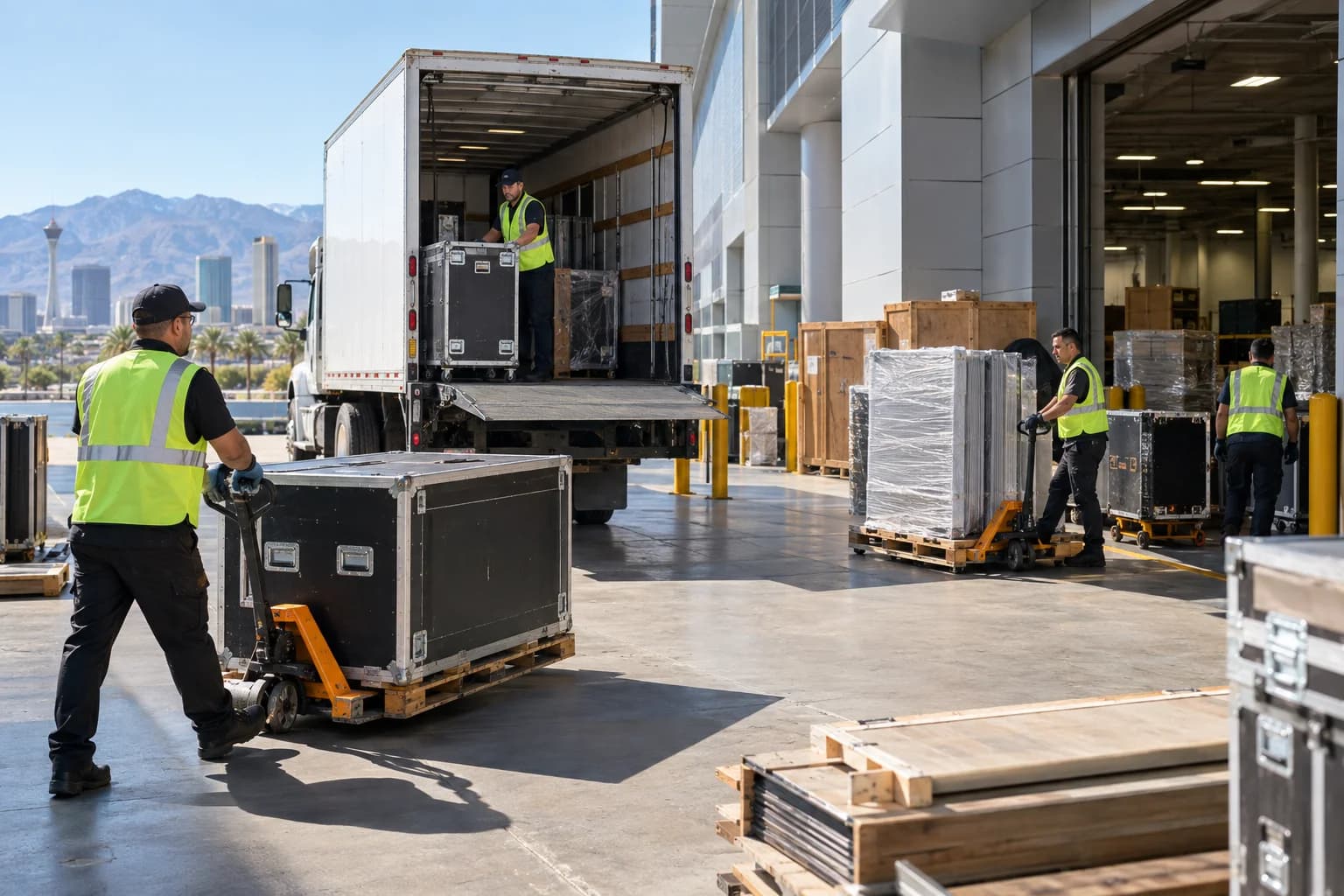
Las Vegas convention freight needs to arrive according to the show’s receiving schedule, not simply whenever the truck reaches Las Vegas. To avoid missing move-in, start with the exhibitor manual, confirm whether your booth is going to an advance warehouse or directly to the show site, work backward from the required delivery window, and choose transportation around the freight and deadline. At Freight Squad, we coordinate nationwide freight into Las Vegas, including convention and event freight, through vetted transportation providers and one point of contact from quote through delivery.
A booth shipment has less scheduling flexibility than an ordinary commercial delivery. If a convention load misses its assigned receiving window, your team may reach the show floor before the display does.
Start With the Show’s Shipping Instructions
Before requesting a rate, pull the current exhibitor manual or shipping instructions for your event. The venue address alone isn’t enough.
Trade shows may use a general service contractor, an advance warehouse, target move-in dates, assigned receiving times, or special labeling rules. Two events in the same Las Vegas venue may follow different procedures.
Look for:
- The exact shipping address
- Advance warehouse dates
- Direct-to-show receiving dates
- Your assigned target date or time
- Booth number and exhibitor name requirements
- Freight label templates
- Restrictions on early or late arrivals
- Return-shipping procedures
For a real example, the SEMA Show exhibitor FAQ describes two shipping paths: advance shipment to the show warehouse or direct shipment to the Las Vegas Convention Center on the assigned target day. Your event may use different dates or contractors, so follow the manual for the show you’re actually attending.
Know Where Freight Transportation Ends
Freight transportation gets the booth from your origin to the receiving point listed by the event. Show-site material handling covers what happens after the freight reaches the show’s receiving operation.
A transportation provider might deliver crates to an advance warehouse. The show contractor may later move them to the booth space. For direct-to-show freight, the truck may still need to follow event check-in instructions before unloading.
That distinction matters when you build the schedule. A truck arriving in Las Vegas doesn’t automatically mean the display is ready for installation.
Advance Warehouse or Direct to Show?
Many conventions give exhibitors an advance-warehouse option, a direct-to-show option, or both.
Advance warehouse shipping creates an earlier delivery deadline and gives the show contractor time to receive and stage the freight before move-in. That buffer can be useful when the shipment has a long route or the booth absolutely must be ready at the start of installation.
Direct-to-show shipping sends freight to the venue during the designated receiving period. It may fit displays that aren’t ready early enough for the warehouse or loads moving on dedicated equipment.
Compare the event rules, your production schedule, shipment size, transportation mode, and how much timing risk your booth can tolerate.
Choose LTL or Full Truckload Around the Booth
Smaller booth shipments often move by LTL freight shipping. Freight Squad lists trade show sample freight as one use case for LTL, which works well when you have several pallets or crates but don’t need an entire trailer.
LTL freight shares trailer space with other shipments and may pass through terminals. That usually lowers transportation cost for smaller loads, but it also creates more handling points. Booth crates and display cases need packaging that can tolerate that environment.
For larger or especially time-sensitive displays, full truckload shipping deserves a comparison. Full truckload gives one shipper dedicated trailer space and typically moves from origin to destination without terminal transfers. Freight Squad also uses FTL for time-sensitive freight and strict pickup or delivery windows.
Don’t choose the mode from pallet count alone. A few custom exhibit crates may carry different handling and scheduling priorities than the same number of pallets of ordinary cartons.
Build the Schedule Backward From Move-In
A standard transit estimate shouldn’t be your entire convention freight plan.
Start with the date the freight must be accepted by the warehouse or venue. Then work backward through the receiving window, expected transit, pickup scheduling, final packing, and the time your exhibit team needs to finish production.
Leave room for ordinary freight problems such as a missed pickup, weather, terminal delay, traffic disruption, or equipment issue. These matter more when the receiving deadline cannot move.
If the exhibit is still being fabricated close to the show date, tell us before the freight is ready. That changes the transportation options worth considering.
Package Booth Freight for the Transportation Mode
Convention freight often includes custom counters, graphics, monitors, product displays, flooring, literature, demo equipment, and booth hardware. Package each handling unit around how it will move.
Crates should support the contents and expected handling. Pallets should stay stable, with products kept inside the footprint where practical. Protect exposed corners, finished surfaces, screens, controls, and other vulnerable parts.
For LTL shipments, repeated terminal handling makes secure unitization especially important. Our guide to packaging LTL freight for terminal transfers covers pallet condition, wrapping, crating, stackability, labeling, and final measurements.
Take photos after the booth is completely packed so your team has a condition record before pickup.
Use the Exact Show Freight Labels
Follow the label template in the exhibitor manual and make sure it matches the delivery method you selected. Advance warehouse and direct-to-show addresses may differ.
Confirm the exhibitor name, booth number, event name, piece count, receiving address, and any required target-date information. Remove old routing labels from reused crates.
The bill of lading should match the freight that actually leaves your facility. If you quote four crates and load five, update the shipment information before departure.
Give the Freight Provider the Convention Details Up Front
A useful Las Vegas convention freight quote needs more than origin, destination, and weight.
Send:
- Show name and venue
- Exhibitor name and booth number
- Advance warehouse or direct-to-show instructions
- Required delivery date and receiving window
- Pickup location and ready date
- Number of pallets, crates, cases, or loose pieces
- Final packaged dimensions and weight
- Stackability and loading requirements
- Photos of unusual or fragile pieces
- Any event-specific carrier instructions
Freight Squad’s Las Vegas freight shipping page confirms support for convention and event freight along with LTL, truckload, flatbed, heavy haul, refrigerated, intermodal, and bulk service in the market.
Complete information lets us match the shipment to equipment and available capacity without building the plan around assumptions.
Account for Accessorials and Receiving Conditions
Convention freight may involve services or conditions outside ordinary dock-to-dock transportation. Appointments, waiting time, liftgates, additional handling, or trade show pickup and delivery may affect the final rate depending on the carrier and shipment.
Our guide to freight accessorial charges explains why these details belong in the quote conversation before pickup.
Ask what the transportation rate covers. Show-site material handling charges may come from the event contractor rather than the transportation provider, so keep those costs separate.
If the truck must follow special check-in, marshaling, or venue instructions, send those instructions with the load details instead of assuming the driver will receive them at the gate.
Plan the Return Before the Show Opens
Decide where the booth goes after the event before your team travels. It may return to your office, move to storage, go directly to the next trade show, or split into separate shipments.
Keep return labels, destination information, piece counts, and contact details ready. Make sure someone knows who will close the crates and confirm the final count after dismantle.

Ship Las Vegas Convention Freight With the Deadline in View
Convention shipping works best when the transportation plan starts with the move-in requirement and works backward. Confirm the show instructions, choose the correct receiving method, package the booth for its transportation mode, and give the freight provider the exact deadline rather than a general arrival date.
At Freight Squad, we arrange nationwide freight shipping into Las Vegas and support convention and event loads through our transportation provider network. Send us the show, venue, origin, booth freight details, dimensions, weight, ready date, and required receiving window. We’ll use those details to match the load with a practical transportation option and keep the delivery requirements connected from quote through arrival.
Recent Posts
El Paso Cross-Border Freight for Manufacturers Shipping Between Texas and Mexico
SEPTEMBER 28, 2026
Boston Pharmaceutical Freight: Building a Reliable Cold Chain Across New England
SEPTEMBER 21, 2026
How to Package LTL Freight for Multiple Terminal Transfers
AUGUST 24, 2026

How Produce Season Affects Refrigerated Freight Capacity
AUGUST 5, 2026
Houston Heavy-Haul Shipping: Planning Industrial and Energy Loads
AUGUST 4, 2026